Insurance Options for Early Retirement: What Nobody Tells You Before You Quit

Your paycheck stops the same day your health coverage does. Nobody mentions that part at the retirement party.
You did the math. You hit your number. You’re ready to walk away from the job that’s been draining you for years. Then you start looking into insurance options for early retirement and realize the whole system was never built to make this easy for you.
It was built to keep you tethered to an employer, a plan, and a network you didn’t choose. The moment you retire before 65, you’re on your own to find coverage. Most of what’s written about it is either outdated or missing the one thing that could cost you thousands: a tax rule that quietly came back in 2026 and almost nobody’s talking about it.
That’s exactly the gap we close. We’re The Benefits Boss, a nationwide insurance advisory, and we shop every major carrier in the country so you don’t have to untangle this alone. Curious how that actually works before you commit to anything? Here’s how our process runs, start to finish, in one call.
Key Takeaways
- Leaving work before 65 means losing employer coverage immediately, and the gap to Medicare can stretch anywhere from a few months to over a decade
- The enhanced ACA subsidies expired at the end of 2025, bringing back a strict income cliff at 400% of the federal poverty level for 2026
- COBRA, Marketplace plans, spousal coverage, and part-time work all solve different problems depending on your timeline and health needs
- How you time retirement account withdrawals can directly affect whether you qualify for a subsidy at all
What Are Your Insurance Options for Early Retirement?
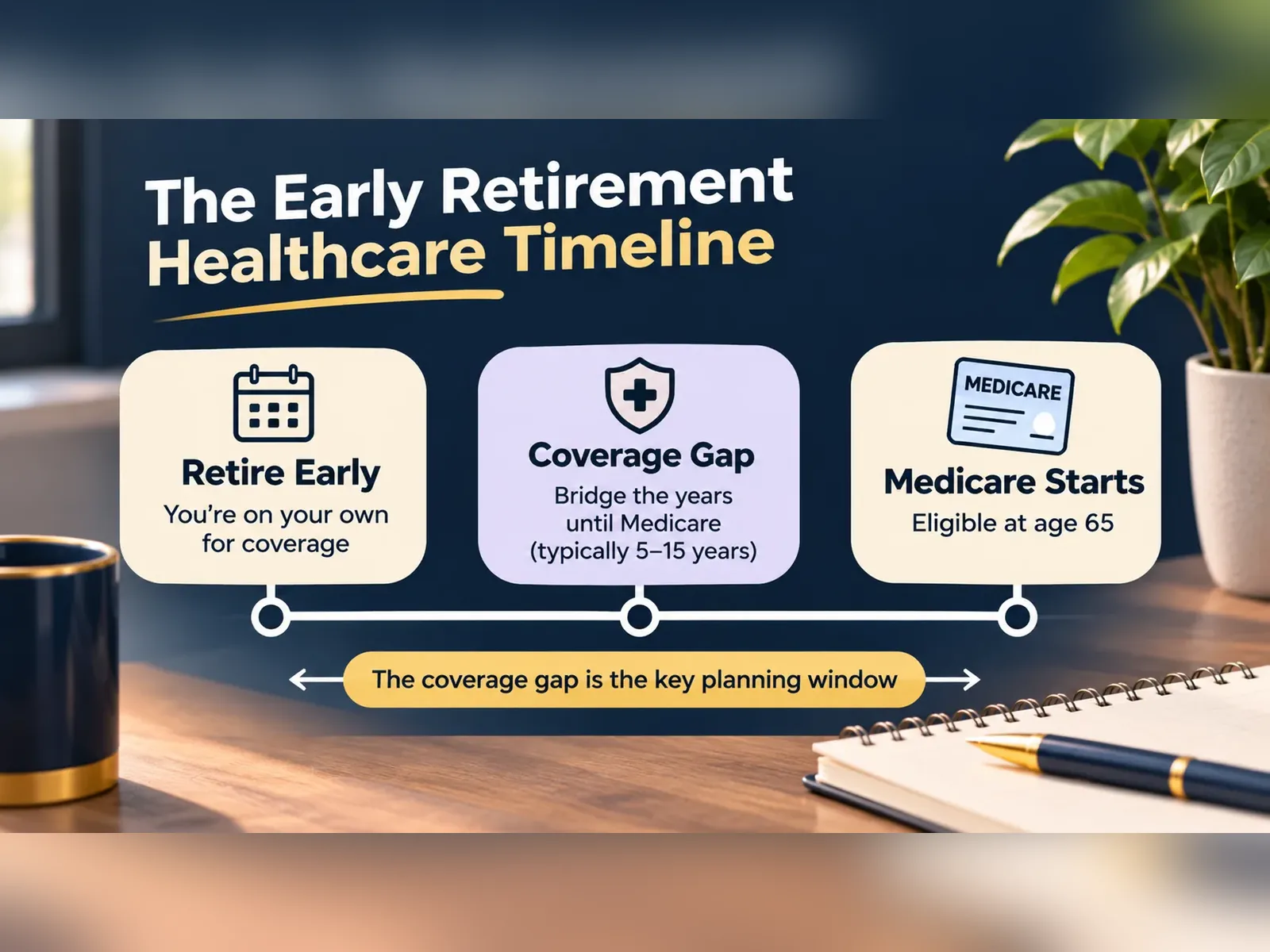
Before picking a lane, you need the full map. The main insurance options for early retirement are COBRA continuation coverage, ACA Marketplace plans, a spouse’s employer plan, part-time work that comes with benefits, and short-term or private plans for narrow gaps.
Medicaid is also on the table if your income drops enough after you stop working, though most people in a $100K-plus household won’t qualify.
The option that fits you depends almost entirely on one number: how many years stand between your last paycheck and your 65th birthday. Someone retiring at 62 has a three-year bridge to build. Someone retiring at 55 has ten.
Those two situations call for completely different strategies. Yet most people research health insurance for early retirees the same way regardless of timeline, usually by defaulting to whatever option an old coworker mentioned. That’s how people end up overpaying for coverage that doesn’t even match how long they actually need it.
The Hidden Subsidy Cliff Nobody Warns Early Retirees About
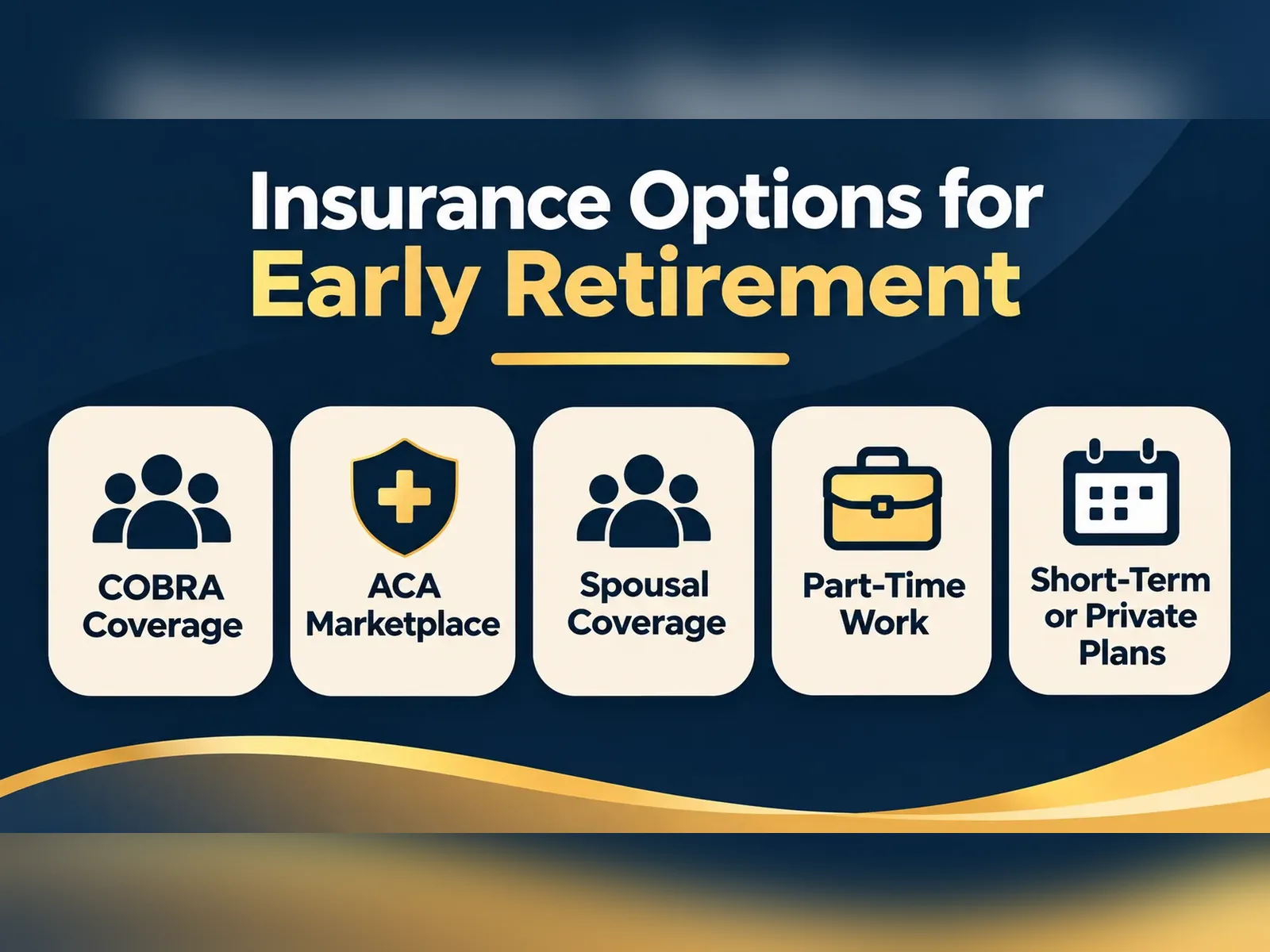
Here’s the part almost nobody writing about this topic in 2026 is mentioning. From 2021 through 2025, Congress removed the income cap on ACA premium tax credits, so even higher earners could get help paying for Marketplace coverage.
Those enhanced subsidies expired on December 31, 2025. Starting this year, the original ACA rule is back in full force, and it’s brutal if you don’t see it coming.
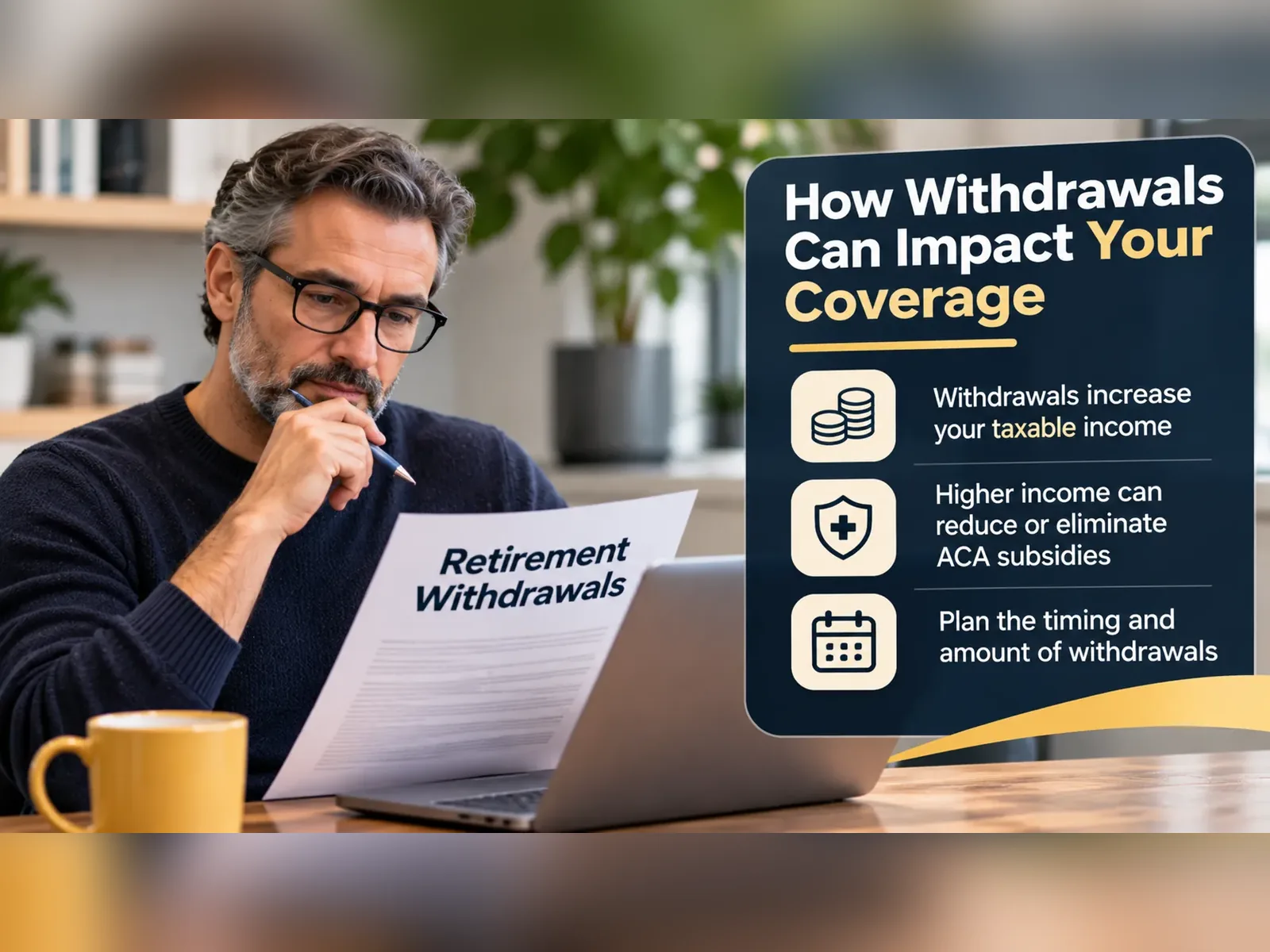
That rule is the ACA subsidy cliff 2026 retirees need to understand before they touch a single retirement account. Cross a specific income line, and your subsidy doesn’t shrink gradually. It disappears entirely, in one step, turning a manageable premium into a bill that can rival a mortgage payment.
This hits early retirees harder than almost anyone else. Retirement income is unusually easy to control in a given year, which makes it unusually easy to accidentally wreck.
How the 400% Income Cliff Actually Works
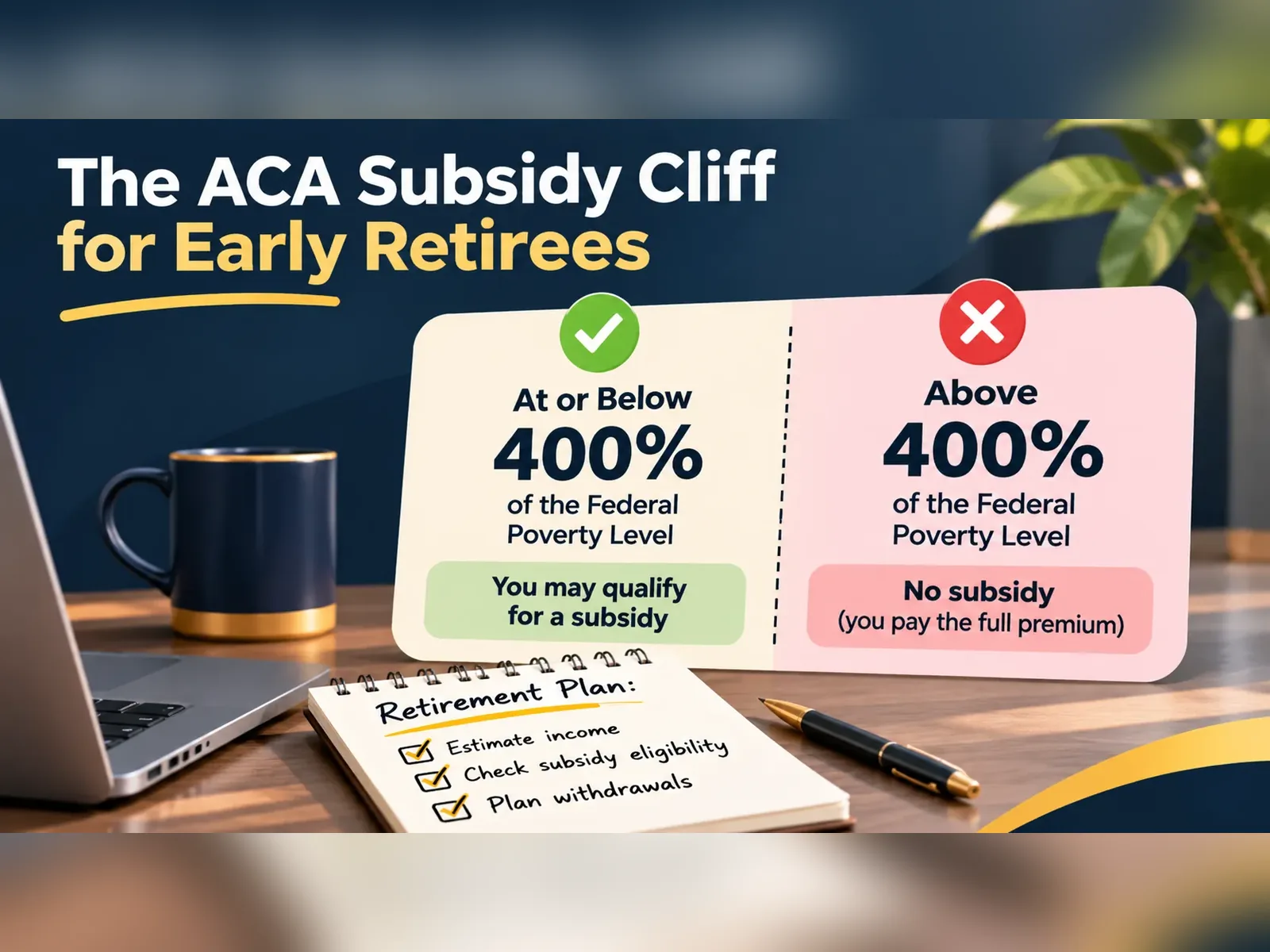
The cliff sits at 400% of the federal poverty level, based on your household’s modified adjusted gross income, or MAGI. That’s not your net worth and not your take-home pay.
For a lot of people, that distinction is confusing. You can have a seven-figure portfolio and still qualify for a subsidy if your taxable income for the year stays under the line. You can also have modest savings and lose the subsidy entirely if a single large withdrawal pushes you over it.
The swing is dramatic. Stay under the threshold, and your premium might run a few hundred dollars a month. Cross it by even a small margin, and that same plan can jump into the thousands, according to HealthCare.gov’s own subsidy guidelines. There’s no gradual phase-out to soften the landing. Curious where you’d land? Our out-of-pocket estimator gives you a quick read before you make any moves.
Why Retirement Account Withdrawals Can Trigger It
This is the trap. A Roth conversion done in the wrong year. A larger-than-usual IRA withdrawal to cover a big purchase. Capital gains realized from selling investments.
Any of these can push your MAGI over 400% of the federal poverty level without you realizing it until tax season, when the subsidy you were counting on all year gets clawed back.
Health insurance, for early retirees, is quietly a tax-planning decision now, not just an insurance decision. That’s a blind spot most people don’t catch on their own. The person managing their retirement withdrawals and the person shopping their health plan are usually two different conversations that never talk to each other. Run your numbers through our ACA subsidy calculator as a gut check before you make a move you can’t easily undo.
COBRA vs. Marketplace Plans: Which Insurance Option Fits Your Timeline
Once you understand the subsidy cliff, the COBRA vs. marketplace insurance decision gets a lot clearer. These are the two most common first moves after leaving a job, and they solve different problems.
One buys you continuity. The other buys you flexibility and, often, a better price.
COBRA Continuation Coverage
COBRA lets you keep your exact former employer plan for up to 18 months after you leave. Same doctors. Same network. Same deductible already in progress.
The catch is the price tag. Your employer stops covering their share, so you pay the full premium plus a 2% administrative fee, which commonly runs $700 to $2,000 or more a month for a household.
COBRA makes the most sense if you’ve already burned through most of your deductible for the year, or you’re mid-treatment with a specialist you don’t want to lose. It makes far less sense as a long-term plan, since 18 months rarely covers the whole stretch to 65. Treat it as a short bridge, not a destination.
ACA Marketplace Plans
Marketplace plans can’t deny you for a pre-existing condition, and every plan has to cover all 10 essential health benefits. That matters a lot once you’re past 40 and statistically more likely to have some health history worth protecting.
Losing your job-based coverage counts as a qualifying life event, which opens a 60-day special enrollment window. The clock starts the moment your old plan ends.
Whether a Marketplace plan actually saves you money comes right back to the subsidy cliff. The same plan can cost a few hundred dollars a month or several times that, depending entirely on how your income lands for the year. We shop every carrier’s ACA Marketplace plans side by side and build the recommendation around your actual income strategy, not just the sticker price.

Other Insurance Options for Early Retirement Worth Considering
COBRA and Marketplace cover most people, but they’re not the only paths. Our licensed advisors see these next three options come up often, and each one fits a specific situation well and falls flat outside of it.
A Spouse’s Employer Plan
If your spouse still works and has coverage, this is usually the cheapest option on the table. You’re only responsible for the cost difference between single and family coverage, not a full premium from scratch.
Losing your own coverage is a qualifying event that opens a 30-day enrollment window on their plan. This needs to happen fast, not as an afterthought a few weeks later.
The tradeoff: you’re locked into their plan’s network, deductible year, and carrier, whether or not it matches what you had before.
Part-Time Work With Benefits
Few people think to look here, but some employers extend group health coverage to part-time staff who hit a minimum hours threshold, often 20 to 30 hours a week.
It’s a solid fit if you want to stay lightly active professionally while meaningfully lowering your insurance cost compared to COBRA or a full-price Marketplace plan.
One wrinkle worth flagging: income from that part-time job counts toward your MAGI. It can push you closer to that same subsidy cliff if you’re also leaning on a Marketplace plan.
Short-Term and Private Plans
Short-term and private plans are medically underwritten, meaning they can flat-out deny you or exclude a pre-existing condition from coverage. They don’t have to include the ACA’s essential health benefits either.
They’re cheap and fast to get. They’re also risky for anyone over 50 with any health history, which describes most people in this age bracket.
Know exactly what’s excluded before you buy one of these as anything more than a short, narrow gap-filler. If you’re weighing this against a fuller option, our private plans page lays out the actual exclusions side by side.
How to Choose the Right Insurance Option for Your Early Retirement Plan
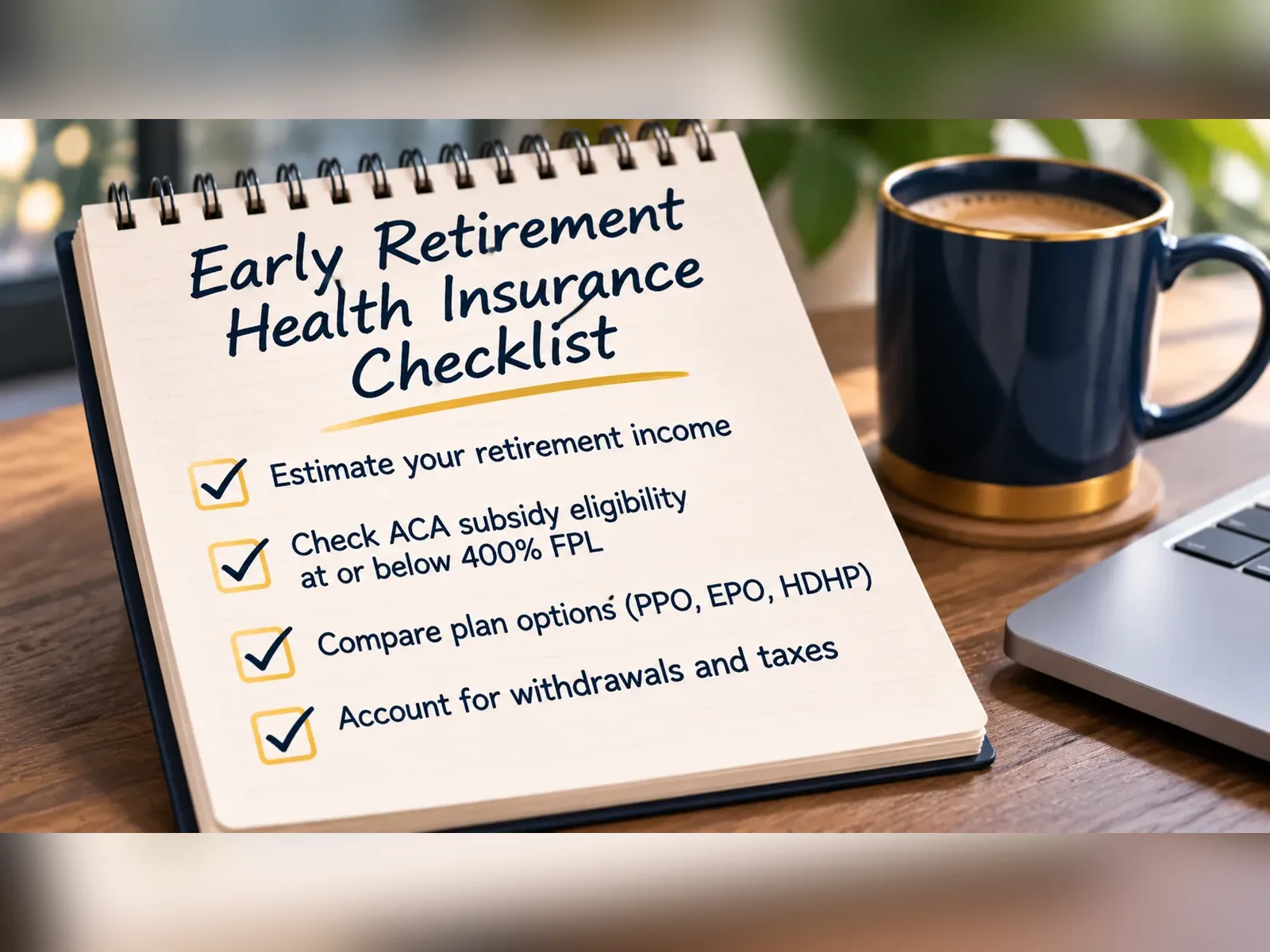
At this point you’ve got the full menu. The right choice sits at the intersection of three things: how many years until Medicare, what your health actually looks like, and how you plan to generate income along the way.
Match Coverage to Your Health Needs and Doctors
Price should never be the only factor, and it’s the mistake we see most often. Switching plans can mean switching doctors, restarting a deductible you’d already made progress on, or losing coverage for a prescription you depend on.
Before comparing premiums, get specific about your current medications, your specialists, and anything you know is coming up, whether that’s a planned procedure or ongoing physical therapy. A cheaper plan that doesn’t cover your cardiologist isn’t actually cheaper.
Our plan quiz is built around exactly this kind of matching, not just price sorting.
Time Your Income to Protect Your Subsidy
This is where the subsidy cliff conversation turns into action. Talk to your financial advisor about spreading Roth conversions across multiple years instead of one large one, timing when you realize capital gains, and using HSA contributions to lower your MAGI in years when you’re close to the 400% line.
None of this is insurance advice on its own. It’s income planning that directly determines what your insurance actually costs you.
This is exactly where early retirement health coverage options stop being a simple shopping decision and start being a coordination problem. If you want a second set of eyes on how the pieces fit together, reach out to our team and we’ll help you think it through.
Work With The Benefits Boss to Lock In the Right Coverage
Health insurance before Medicare isn’t one decision. It’s a handful of smaller ones that all affect each other: timeline, health needs, income strategy, and which carrier actually fits your situation.
Get one piece wrong and the rest can unravel fast. We’ve built our entire model around catching exactly that, with access to every major carrier in the country and close to 1,500 five-star reviews from people who’ve been through this same decision.
One call, built around your doctors, your income plan, and your timeline, and we’ll build a recommendation that actually fits. Book your free consultation before you hand in your notice, not after.
Written by Marco
Licensed Coverage Advisor at The Benefits Boss